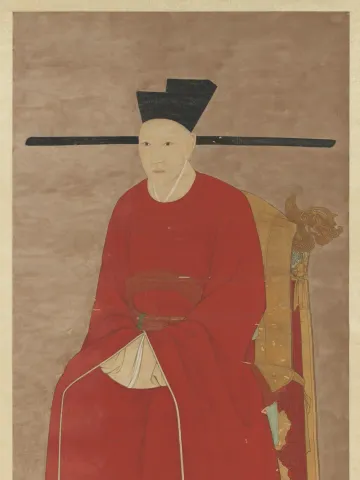
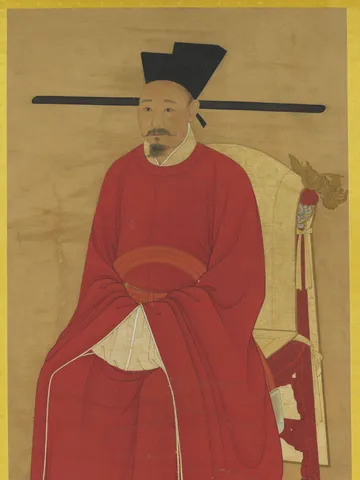
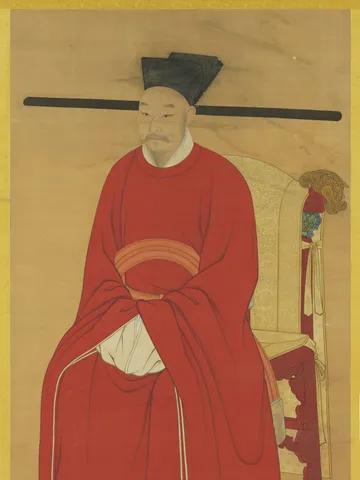
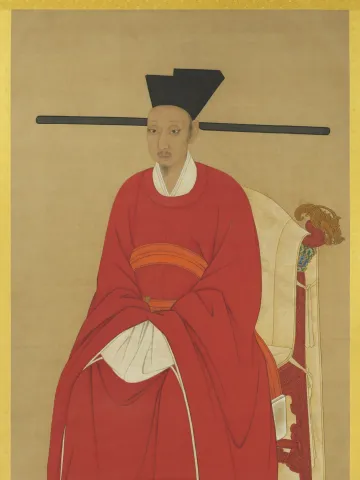
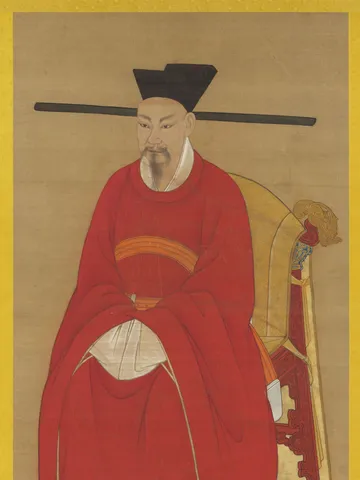
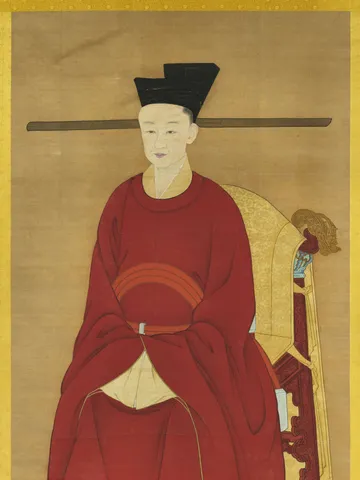
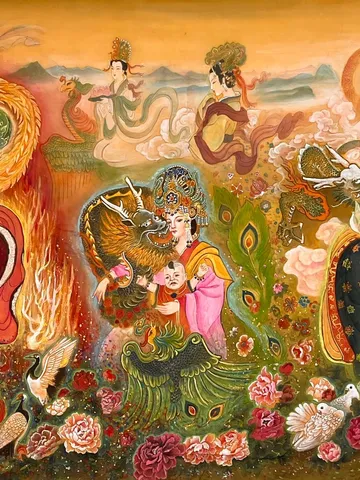
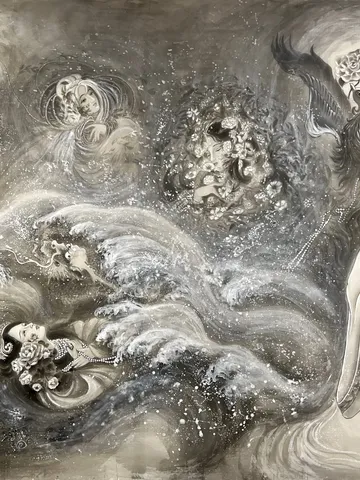
南宋诸皇后
了解李湘《中国皇后》系列中的南宋诸皇后,探索其历史背景及与中国历代宫廷女性的联系。
南宋皇后
“A Hundred and Fifty Years on Borrowed Time”
An emperor who left the position empty for sixteen years waiting for a wife already dead in captivity. A woman who wore armour at his door and outlived five reigns. And Li Fengniang, who sent her husband a box containing a servant’s severed hands and broke his mind.
The Nine
 XianjieGaozong
 XianshengGaozong
 ChengmuXiaozong
 AnmuXiaozong
 ChengsuXiaozong
 Cixian — Li FengniangGuangzong
 GongshuNingzong
 GongshengNingzong
 QuanDuzong
Empress Xianjie 邢秉懿 · 宪节皇后

consort of Emperor Gaozong · 1106 – 1139 · taken north 1127
She was married to Zhao Gou before he was emperor, and she was pregnant when the Jurchens took Kaifeng. She was deported with the rest of the imperial house and miscarried on the road.
He escaped south and became Emperor Gaozong of the Southern Song, and he left the position of empress vacant and waited for her. He negotiated for her return for years.
She died in captivity in 1139. Nobody told him. He went on waiting, and appointed no empress, for another three years — sixteen in total — until the news finally reached him in 1142 along with her coffin.
Empress Xiansheng 吴氏 · 宪圣慈烈皇后

consort of Emperor Gaozong · 1115 – 1197 · empress 1143 · lived through five reigns
She joined Gaozong’s household at fourteen, during the years when the court was being chased down the coast by Jurchen cavalry and once had to take to ships. She wore armour and carried a sword in his household guard, and during the Miao–Liu mutiny of 1129 she stood at his door.
She was made empress in 1143 after Empress Xing’s death was confirmed, and she then outlived almost everyone: empress under Gaozong, empress dowager under Xiaozong, grand empress dowager under Guangzong, and still alive under Ningzong.
In 1194, aged seventy-nine, she personally resolved a constitutional crisis — Guangzong had collapsed mentally and refused to attend his own father’s funeral, and she presided over the rites herself and then authorised his deposition.
She died in 1197 at eighty-two, having been the most respected person in the empire for half a century.
Empress Chengmu 郭氏 · 成穆皇后

consort of Emperor Xiaozong · d. 1156 · honoured posthumously
Married to Zhao Shen before he was adopted as heir. She bore him four sons and died in 1156, six years before he took the throne.
Empress Anmu 夏氏 · 安穆皇后

consort of Emperor Xiaozong · d. 1167 · empress 1162
Made empress when Xiaozong took the throne in 1162 and died five years later. Xiaozong is generally reckoned the best emperor of the Southern Song — he rehabilitated Yue Fei, cleaned out the corruption of the Qin Hui years, and then abdicated to care for his father.
Empress Chengsu 谢氏 · 成肃皇后

consort of Emperor Xiaozong · 1132 – 1203 · empress 1176
She had entered the palace as a servant and rose to be Xiaozong’s third empress. She survived the whole of the reign of Guangzong and the crisis of 1194.
Empress Cixian — Li Fengniang 李凤娘 · 慈懿皇后

consort of Emperor Guangzong · 1144 – 1200 · empress 1189
She is the reason a Chinese emperor lost his mind in office.
A general’s daughter, married to the heir on the strength of a fortune-teller’s prediction that she would be the mother of an emperor. Xiaozong disliked her intensely and said so; she never forgot it.
When Guangzong took the throne in 1189 she took the palace. He admired a serving girl’s hands while washing; a box arrived at his table shortly afterwards containing the girl’s severed hands. While he was away performing the state sacrifices she had his favourite consort killed, and told him on his return that the woman had died suddenly of illness.
He broke down. He stopped attending court, became terrified of his own wife, and when his father Xiaozong died in 1194 he refused — could not — attend the funeral. An emperor failing to mourn his own father was a constitutional emergency in a Confucian state, and the court had no mechanism for it.
Empress Dowager Wu, aged seventy-nine, presided over the funeral in his place and then authorised his removal. Li Fengniang lost everything overnight and died six years later.
The Emperor had praised the whiteness of her hands. Some days later a covered dish was brought to his table, and in it were the hands.
On Li Fengniang and Emperor Guangzong — Song Shi, ch. 243
Empress Gongshu 韩氏 · 恭淑皇后

consort of Emperor Ningzong · d. 1200 · empress 1194
A great-niece of the chancellor Han Tuozhou, and empress for six years. Her death in 1200 opened the position that the next woman on this page wanted.
Empress Gongsheng 杨氏 · 恭圣仁烈皇后

consort of Emperor Ningzong · 1162 – 1233 · empress 1202 · regent 1224
Her origins are genuinely obscure — she came into the palace as a performer in the entertainers’ troupe and later attached herself to a Yang family of standing. She was highly literate, wrote poetry, and her calligraphy survives on paintings in major museum collections today.
Han Tuozhou opposed her appointment as empress. She got it anyway in 1202, and in 1207, after his catastrophic war against the Jin, she and the chancellor Shi Miyuan had him ambushed and clubbed to death on his way to court. His head was cut off and sent to the Jin as a peace offering.
When Ningzong died in 1224 she and Shi Miyuan set aside the designated heir and enthroned a different prince, who became Emperor Lizong. She was regent, and she was the last effective ruler the Southern Song had.
Empress Quan 全氏 · 全皇后

consort of Emperor Duzong · 1241 – after 1276 · empress 1267
Her father died fighting the Mongols. She was married to Duzong in 1267, and bore the child who became the last real emperor of the Song.
In 1276 the Mongol armies reached Hangzhou. The court surrendered — the seal was handed over by the grand empress dowager Xie Daoqing, who was ill and nearly blind and had held the government together for two years.
Empress Quan was taken north to Dadu with her son. Kublai Khan’s wife Chabi is recorded intervening to have them treated decently. She became a Buddhist nun in a convent in Hebei and lived out her life there.
Her son was sent to Tibet as a monk and was ordered to die in 1323, forty-seven years after his surrender.
A note on the sources
Li Fengniang is drawn by the Song Shi as a monster, and it is worth noting that Guangzong’s incapacity was politically catastrophic and somebody had to be blamed for it. Modern historians generally accept that he suffered a genuine psychiatric illness and that her cruelty was real but not the whole cause.
Empress Yang is the opposite case: she was an entertainer who reached the throne and helped assassinate a chancellor, and the histories are noticeably restrained about her — because the men who wrote them owed their positions to the faction she installed.
- Tuotuo et al., Song Shi (History of Song), ch. 243 — 1345
- Li Xinchuan, Jianyan Yilai Xinian Yaolu — 13th century
- Patricia Buckley Ebrey, The Inner Quarters — California, 1993
- Richard L. Davis, “The Reign of Kuang-tsung and Ning-tsung”, in The Cambridge History of China, Vol. 5 — 2009
Connections
- The woman who founded it Empress Meng — deposed, struck from the register, and therefore the only member of the imperial house the Jurchens left behind.
- Before the fall The thirteen empresses of the early Northern Song.
- Who ended it The Yuan empresses — Chabi, whose husband Kublai took Hangzhou in 1276.
- The last one Xie Daoqing — ill and nearly blind, she held the government for two years and then handed over the seal.
About this Painting
| Artist | Xiang Li 李湘 |
| Medium | Chinese watercolor on silk |
| Subjects | Nine empresses of the Southern Song, on one silk |
| Painted | 2022 |
| Collection | The Chinese Empresses Collection |
| Availability | Original held by the artist · Prints available |