The Empresses of the Late Northern Song
北宋后期皇后
“The Ones Who Were Taken”
Five empresses across three reigns, ending in 1127 with the single worst catastrophe in Chinese dynastic history. Four of them went north in chains. The fifth had been thrown out of the palace years earlier — which is why the Jurchens did not have her name, and why the dynasty survived at all.
The Five
 MengZhezong
 LiuZhezong
 WangHuizong
 ZhengHuizong
 ZhuQinzong
Empress Meng 孟皇后 · Empress Zhaoci 昭慈皇后
consort of Emperor Zhezong · 1073 – 1131 · empress 1092 · deposed 1096 · restored 1100 · deposed 1101
She was deposed twice and restored twice, and being out of the palace is what saved her — and the dynasty.
Chosen as empress by Empress Dowager Gao in 1092. When Gao died and Zhezong took control he turned against everything his grandmother had built, including his wife. In 1096 a charge of sorcery was manufactured against her; the investigators tortured more than thirty of her servants, some to death, and several had their tongues cut out so they could not testify. She was deposed and sent to a Daoist convent.
She was restored in 1100, deposed again in 1101, and spent the next twenty-six years living quietly outside the palace as a nun.
Then in 1127 the Jurchens took Kaifeng and deported the entire imperial family — two emperors, the empresses, the consorts, the princesses, some fourteen thousand people. Because Empress Meng had been struck from the register, the Jurchens did not have her name on the list. She was the only member of the imperial house left in the south.
She issued the edict that made Zhao Gou emperor, founding the Southern Song, and served twice more as regent during the flight from the invading armies — once conducting government from a boat. She died in 1131.
A dynasty survived because a woman had been thrown out of it.
Because she had been deposed, her name was not on the register — and so she alone was not taken.
On Empress Meng and the deportation of 1127 — Song Shi, ch. 243
Empress Liu 刘皇后 · Empress Zhaohuai 昭怀皇后
consort of Emperor Zhezong · 1079 – 1113 · empress 1099
The consort who replaced Empress Meng, and the beneficiary of the sorcery case. She was made empress in 1099 and Zhezong died the following year, aged twenty-three.
Under Huizong she lost every protector she had. In 1113 the court moved against her and she was compelled to hang herself. She was thirty-four.
Empress Wang 王皇后 · Empress Xiangong 显恭皇后
consort of Emperor Huizong · 1084 – 1108 · empress 1100
Huizong’s first empress, described as plain, frugal and entirely without ambition in a court that was becoming the most extravagant in Chinese history.
She was the subject of a slander campaign by rivals and defended by her own household staff under interrogation. She died in 1108 at twenty-four.
Empress Zheng 郑皇后 · Empress Xiansu 显肃皇后
consort of Emperor Huizong · 1079 – 1130 · empress 1110
She began as a palace attendant in Empress Dowager Xiang’s household and was given to Huizong. She was well read and wrote poetry, and a collection of her ci circulated at court.
In 1127 she was taken north with the rest of them. The captives were marched to Manchuria; the women of the imperial house were distributed among the Jurchen nobility or sent to the Washing-Clothes Institute, which was a brothel in all but name. She survived the journey and died in captivity in 1130, aged fifty-one.
Empress Zhu 朱皇后 · Empress Renhuai 仁怀皇后
consort of Emperor Qinzong · 1102 – 1127 · empress 1126
She was empress for a little over a year. Her husband had been handed the throne by his father in the last weeks before the siege — Huizong abdicated rather than preside over the fall — and she was twenty-four when Kaifeng was taken.
On the road north she drowned herself in the Jurchen camp rather than be handed over. She was twenty-five.
Her father-in-law and her husband both survived, and both died prisoners in Manchuria — Huizong in 1135, Qinzong in 1161, thirty-four years a captive.
A note on the sources
The Jingkang Incident is documented from both sides, and the Jurchen records are in some respects more explicit than the Chinese ones about what happened to the women of the imperial house. A captivity account known as the Qingkang Baishi circulated later and is lurid enough that historians treat it cautiously, but the outline — the march north, the distribution of the imperial women, the Washing-Clothes Institute — is not disputed.
Empress Meng’s survival is a matter of plain administrative record: she had been struck from the palace register, and the deportation worked from the register.
- Tuotuo et al., Song Shi (History of Song), ch. 243 — 1345
- Xu Mengxin, Sanchao Beimeng Huibian — 12th century
- Patricia Buckley Ebrey, Emperor Huizong — Harvard, 2014
- Ari Daniel Levine, “The Reigns of Hui-tsung and Ch’in-tsung”, in The Cambridge History of China, Vol. 5 — 2009
Connections
- Before them The thirteen empresses of the early Northern Song — including Empress Xiang, who chose Huizong over her chancellor’s objection that he was unfit.
- What Empress Meng founded The Southern Song empresses — the dynasty she legitimised from outside the palace in 1127.
- The comparison Empress Li of the Later Jin — deported north by a steppe power a hundred and eighty years earlier, for the same reason: a frontier that had been given away.
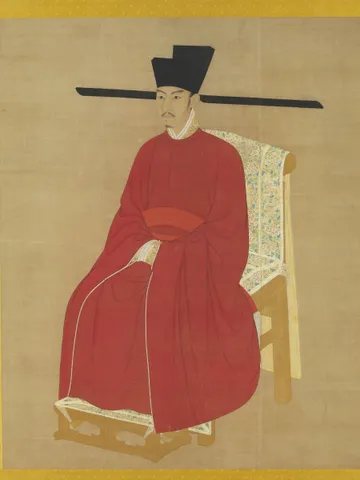
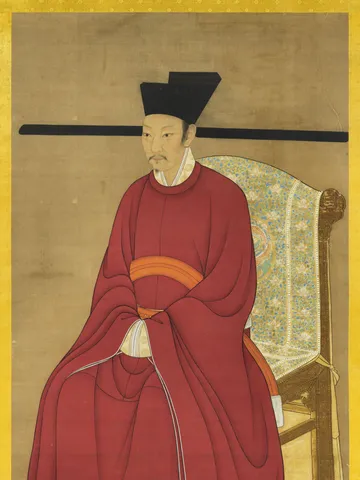
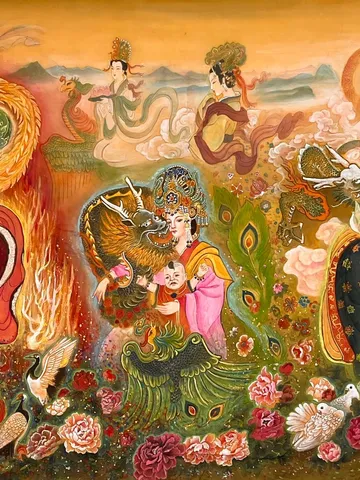
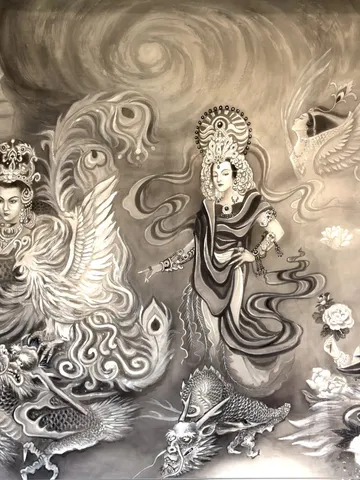
About this Painting
| Artist | Xiang Li 李湘 |
| Medium | Chinese watercolor on silk |
| Subjects | Five empresses of the late Northern Song, on one silk |
| Painted | 2022 |
| Collection | The Chinese Empresses Collection |
| Availability | Original held by the artist · Prints available |