羊 羊
羊 Goat — 中国生肖的第8个符号,由李湘绘制,其名称以甲骨文形式书写。美字内的字符。
The character inside 美
- Kind
- Artistic
- Peaceable
- Sensitive
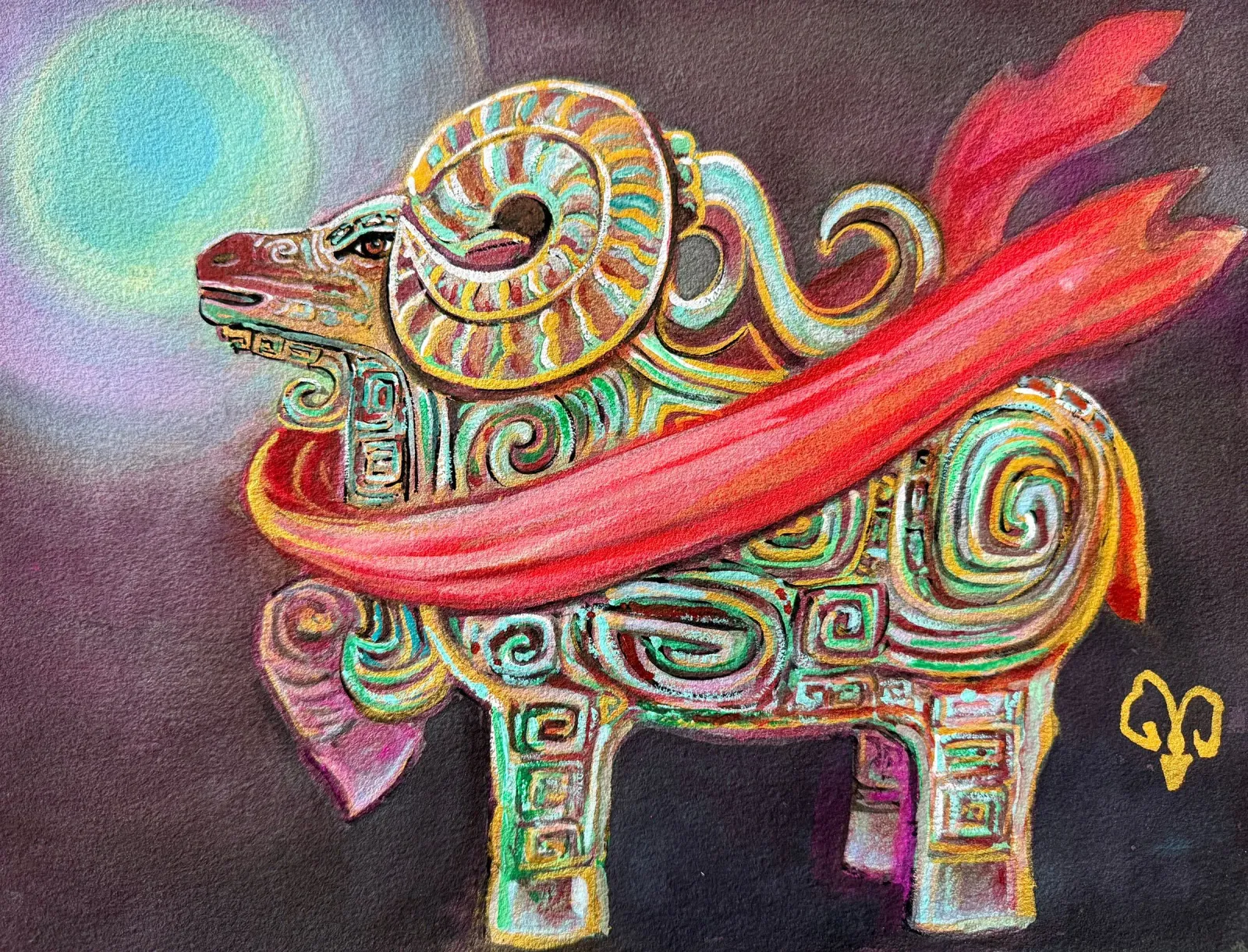
羊 is one of the load-bearing characters of the language. Put it over 大 and you get 美, beautiful. Put it over 我 and you get 義, righteousness. Put it beside 食 and you get 養, to nourish. A civilisation that built its words for beauty and virtue out of the sign for sheep was not being sentimental — it was being agricultural.
The sign itself is the gentlest of the twelve: kind, creative, easily hurt, happiest making something. It is also the one Chinese parents are most often warned about, on the strength of a superstition about Goat-year children that historians can trace no further back than the late Qing and that nobody has ever been able to substantiate.
Painted, again, as a bronze — the four-ram 尊 in the National Museum in Beijing is the most famous surviving Shang bronze of all, and this ram stands in that shadow. The red sash is the one thing in the picture that moves.
The name in the corner
Bottom right, and painted in gold rather than black: the old form of 羊, a head seen from the front with two horns curling inward. Only the goat and the dog are written in gold — both of them the ones painted as bronzes on a dark ground.
Why oracle-bone script →Give the Year of the Goat
Canvas prints, scarves, puzzles and more — from $14.
Two full-color hardcovers — 217 empresses, 413 painted characters.
Questions? Write to xiangliart@gmail.com