Art You Can See, Smell, Make, and Wear: Our Second Multisensory Experience at Creative Hub Worcester
July 17, 2026 · Fei Wu · 8 min read
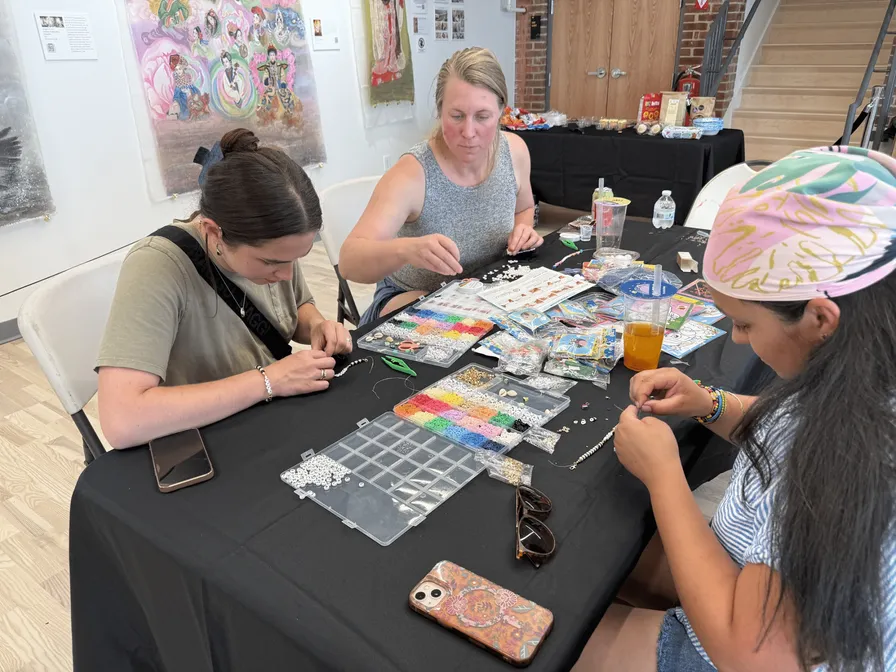
On Saturday June 13, 2026, we returned to Creative Hub Worcester for an afternoon that brought together original silk paintings, personal stories, hands-on creativity, fragrance, jewelry, books, and plenty of joyful experimentation.
The official program was Xiang Li’s Artist Talk and Book Signing, but we wanted the afternoon to offer more than a traditional gallery presentation. Inspired by what we learned during our first multisensory Chinese Empress experience at JMAC, we expanded the format with several new activities: painting bear keychains, creating personal perfumes, and making necklaces.
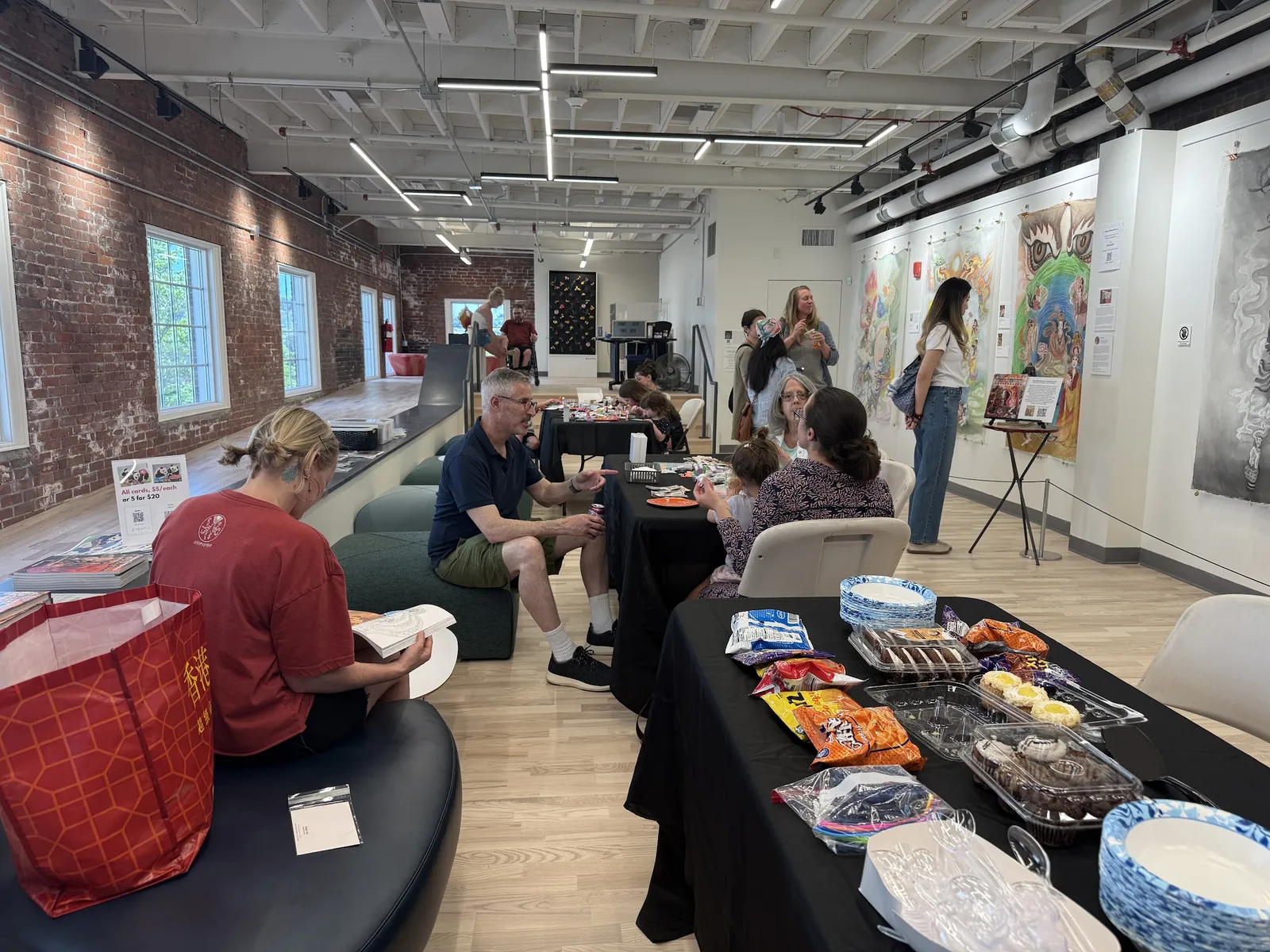
Children arrived with parents and their friends. Adults sat down at the activity tables alongside them. Some guests came specifically to meet Xiang and learn about her art, while others discovered the event after entering the Creative Hub. Before long, the gallery was filled with conversation, color, laughter, and the concentration that appears when someone becomes completely absorbed in making something with their hands.
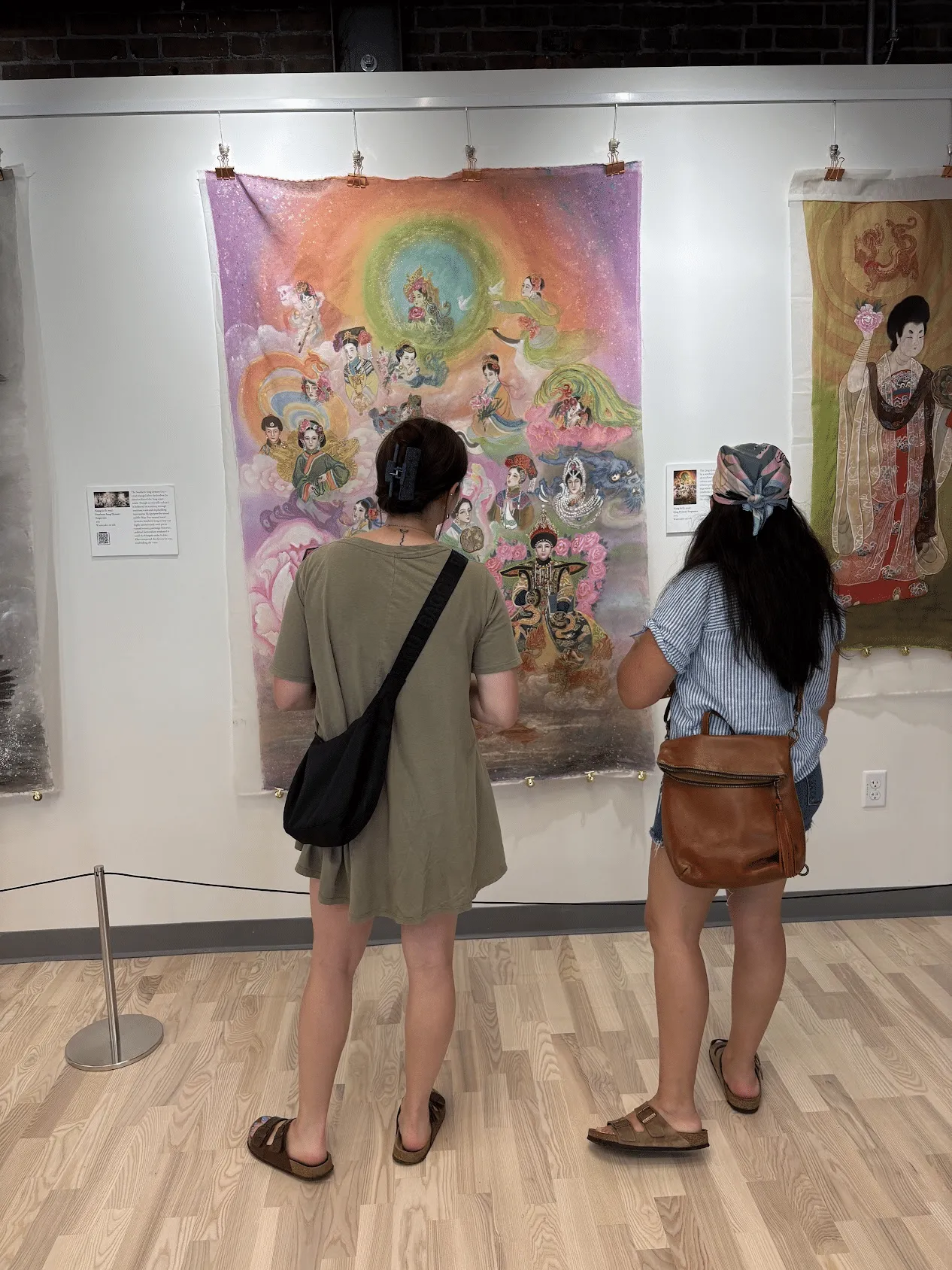
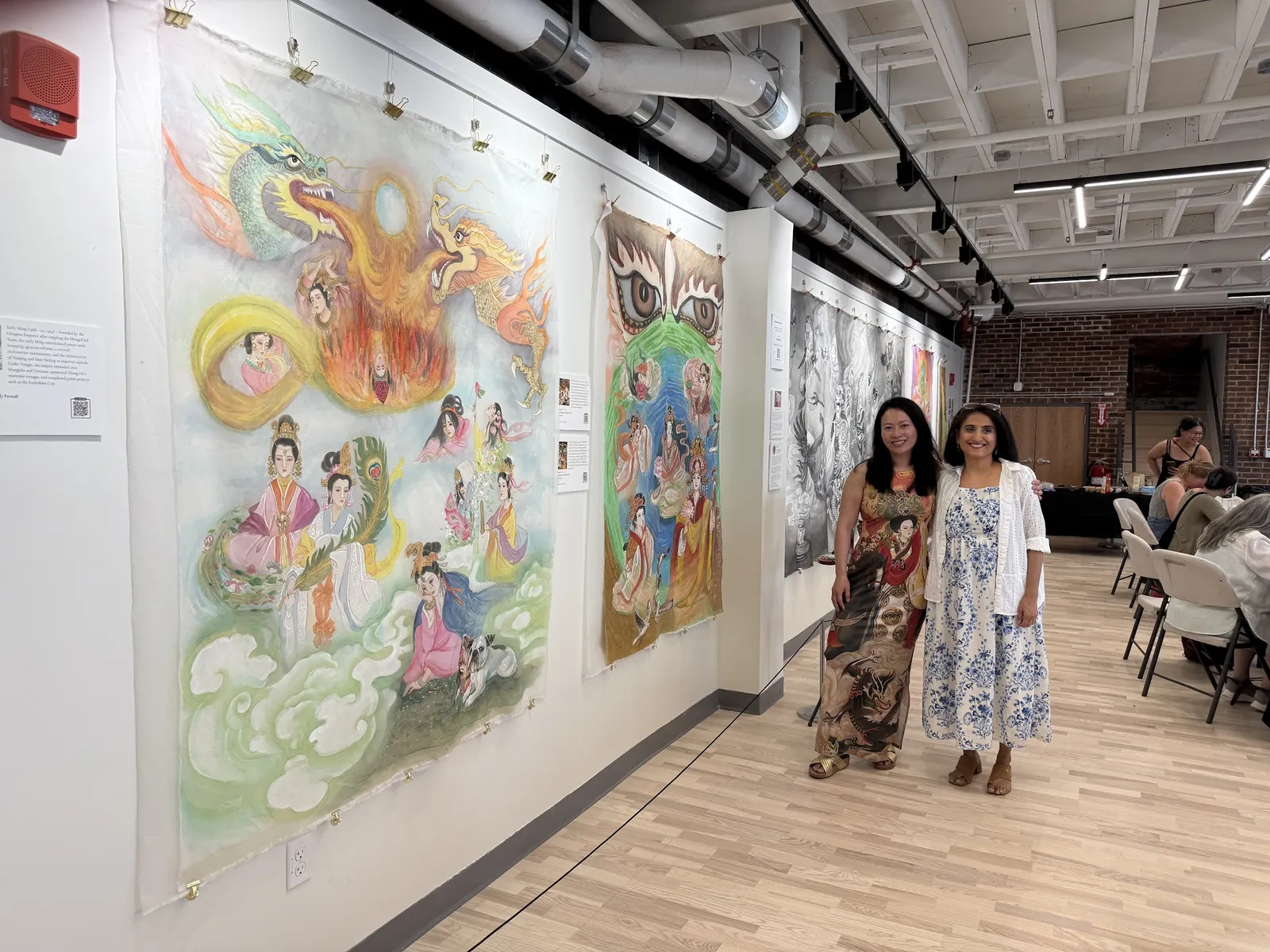
All of this unfolded in front of Xiang Li’s original watercolor-on-silk paintings.
Building on What We Learned at JMAC
Only a few weeks earlier, we hosted our first dedicated multisensory Chinese Empress Art and Culture Experience at the Jean McDonough Arts Center in downtown Worcester.
That event became an important new goalpost for Xiang Li Art. It helped us understand that visitors often want more than information about a painting. They want to come closer to its world. They want to notice the materials, explore the symbols, ask questions, touch related objects, create something of their own, and share the experience with other people.
We wrote about those discoveries in our previous post, A New Goalpost for Xiang Li Art: What We Learned from Our Multi-Sensory Chinese Empress Experience at JMAC.
At the end of that experience, I wrote that we hoped to introduce more interactive objects, more opportunities for families to participate, and more ways for visitors to slow down, play, and create at our next event. The June gathering at Creative Hub gave us the opportunity to put those ideas into practice.
JMAC was where we first tested the possibilities. Creative Hub became the next chapter.
Painting Bear Keychains
The painted bear keychains quickly became one of the afternoon’s most popular activities.
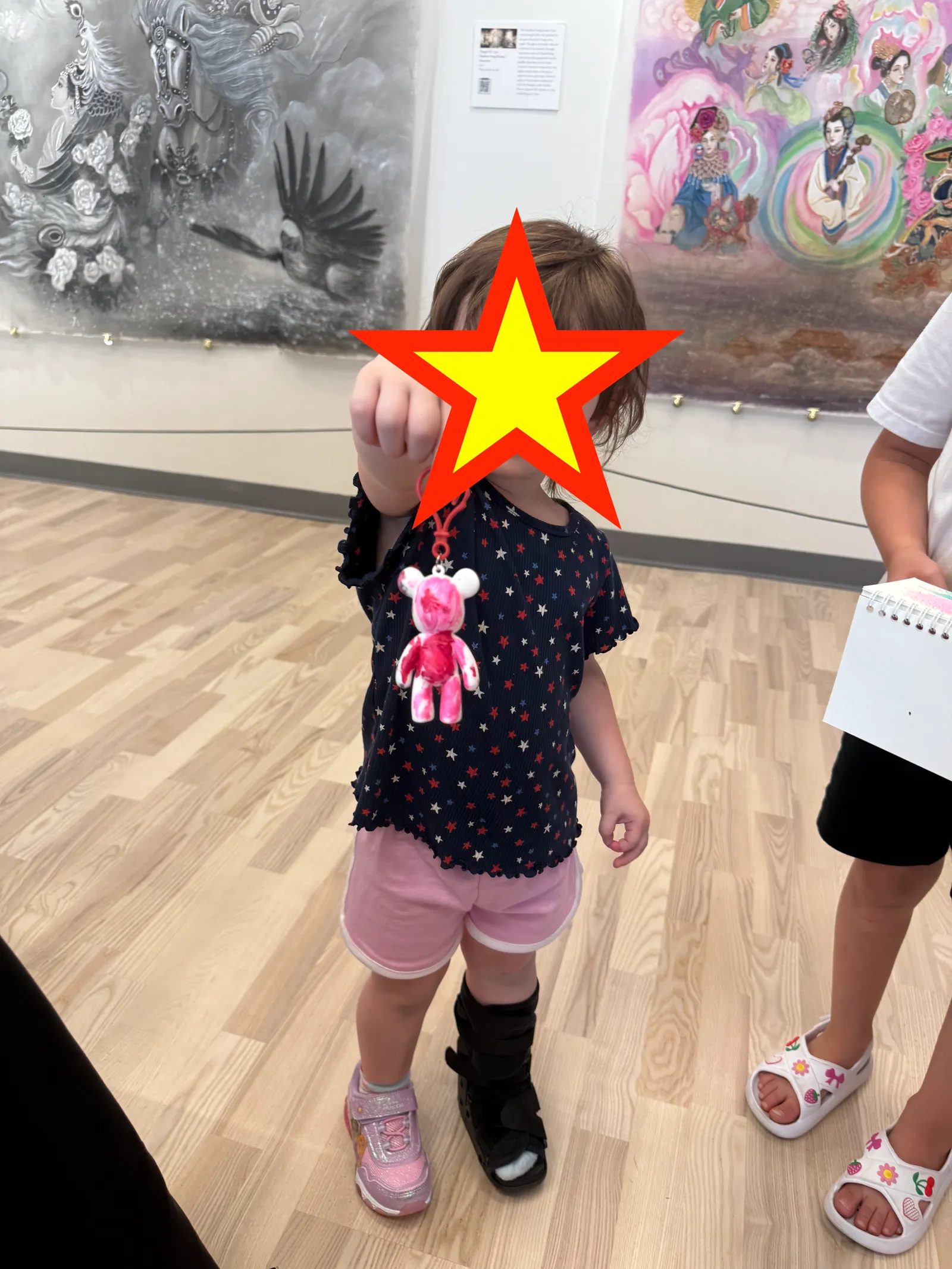
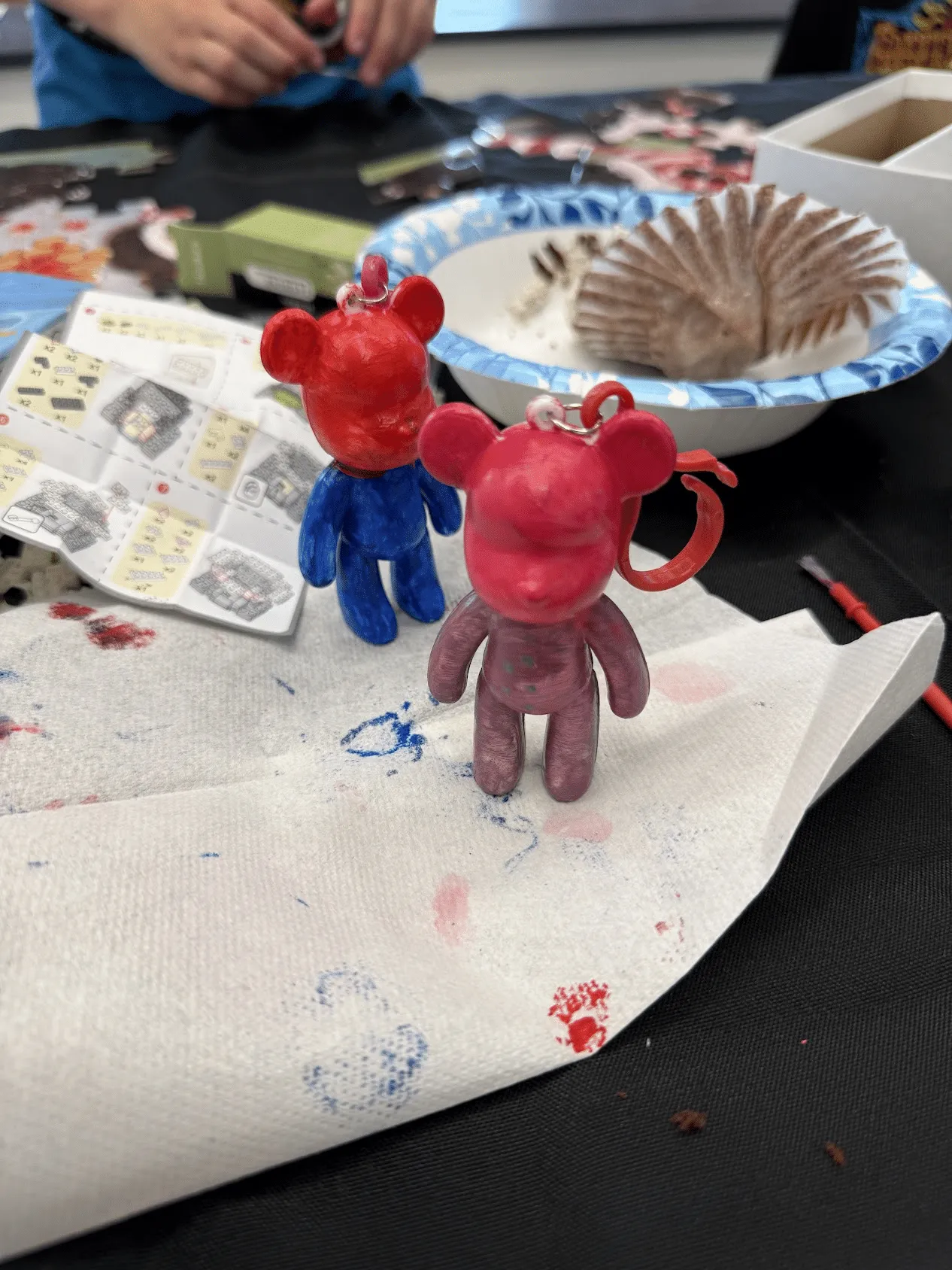
Each person began with the same small three-dimensional bear, but no two finished pieces looked alike. Some visitors worked carefully with a limited color palette. Others added energetic patterns, bright combinations, tiny details, or unexpected expressions.
Children naturally understood the invitation to experiment, but adults became equally engaged. There is something wonderfully freeing about being given a small object, a collection of art supplies, and permission to make it entirely your own.
The bears also offered a gentle connection to Xiang’s wider artistic world. Although her original silk paintings demonstrate extraordinary technical precision, every artist—including a complete beginner—starts by observing, choosing colors, experimenting, and responding to what appears in front of them.
These little bears may have been playful, but the process behind them was real creativity.
Creating Perfumes and Memories Through Scent
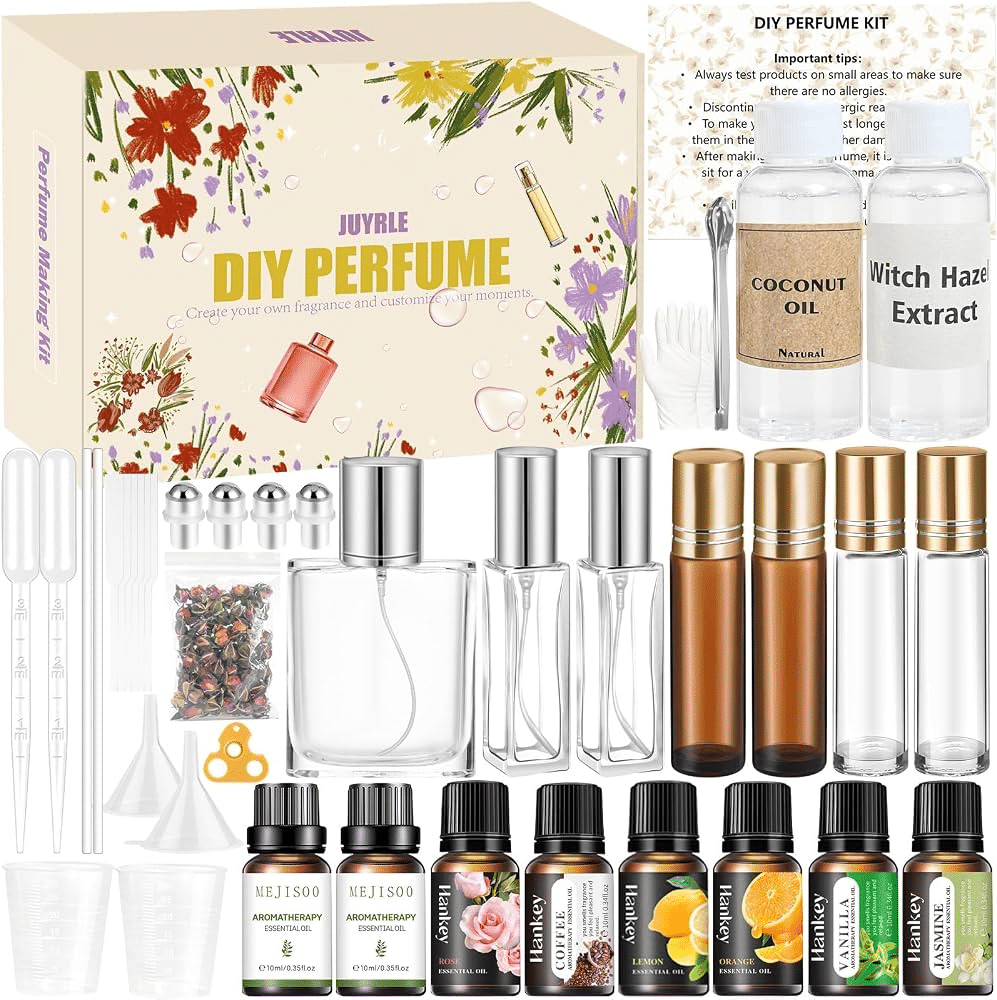
The perfume-making station added an entirely new dimension to our multisensory format.
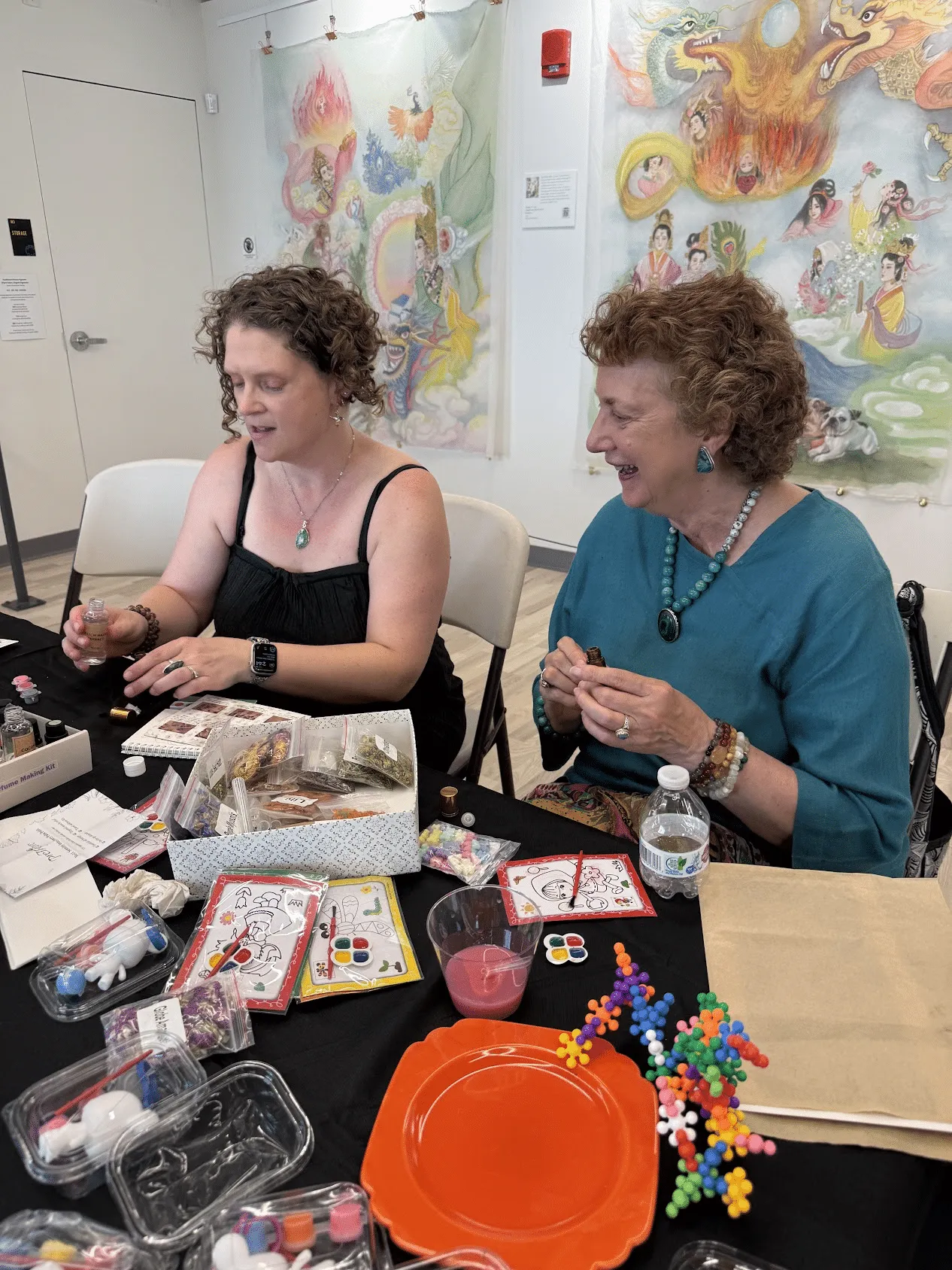
Visual art naturally begins with sight. But scent can evoke memory, place, personality, and emotion in a way that images alone cannot. Guests explored different fragrances and created personal combinations based on what appealed to them.
Some preferred soft floral notes. Others gravitated toward scents that felt brighter, sweeter, fresher, or more mysterious. The activity did not require any knowledge of perfume. It simply invited each participant to pause, smell, compare, and decide.
That process felt surprisingly connected to viewing art.
When we stand in front of a painting, we also notice what draws us closer. We respond to colors, facial expressions, clothing, flowers, gestures, and atmosphere. We may not always be able to explain immediately why something appeals to us, but the response is still meaningful.
By introducing scent into the gallery, we encouraged visitors to trust another kind of perception.
Making Necklaces Together
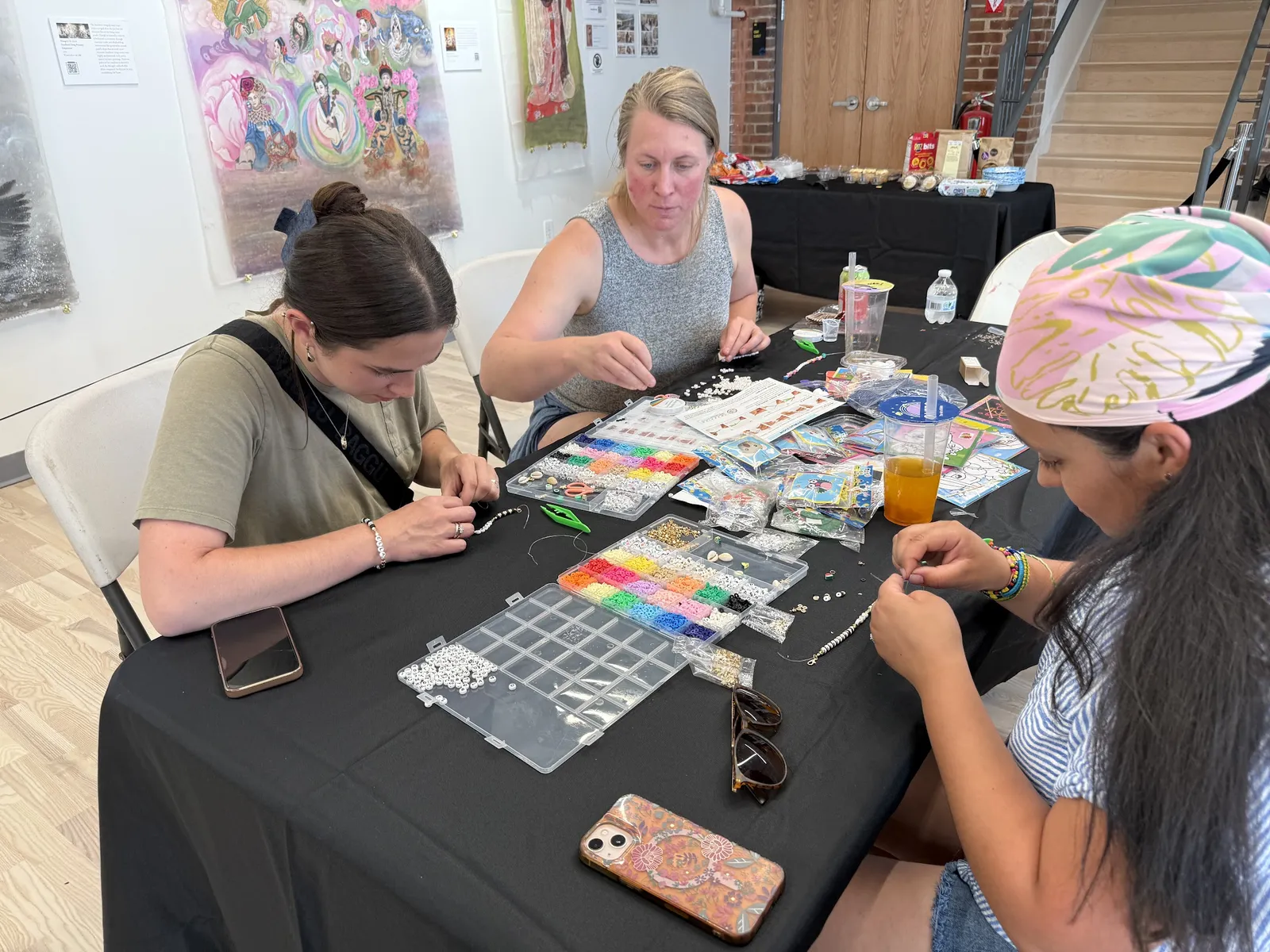
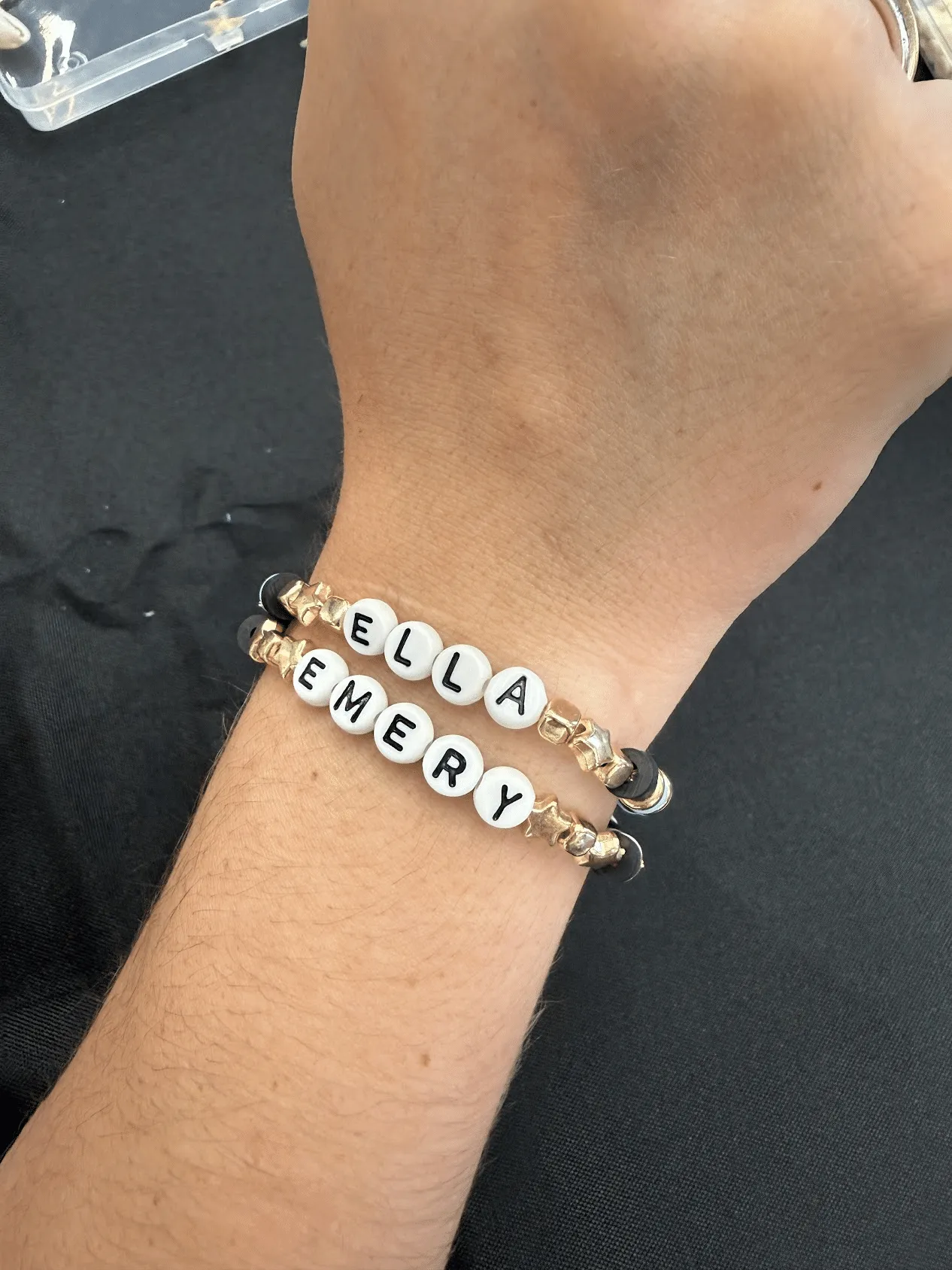
At another table, guests selected beads, colors, shapes, and decorative elements to create their own necklaces.
Jewelry has always been closely connected to identity, ceremony, family, status, and storytelling. It is also an important visual element throughout Xiang Li’s Chinese Empresses Collection. The empresses are surrounded by carefully researched garments, headdresses, ornaments, flowers, and symbolic details that help communicate their historical periods and individual stories.
Our necklace activity was not intended to reproduce imperial jewelry. Instead, it offered a contemporary and accessible way for visitors to think about adornment and personal expression.
What colors represent you? Which materials do you naturally reach for? Do you prefer something simple and balanced, or something bold and elaborate?
As children and adults compared materials and helped one another assemble their designs, the activity became both personal and communal. Each person left with something wearable that carried a memory of the afternoon.
Stories Behind the Silk Paintings
At the center of the gathering was Xiang Li’s artist talk.
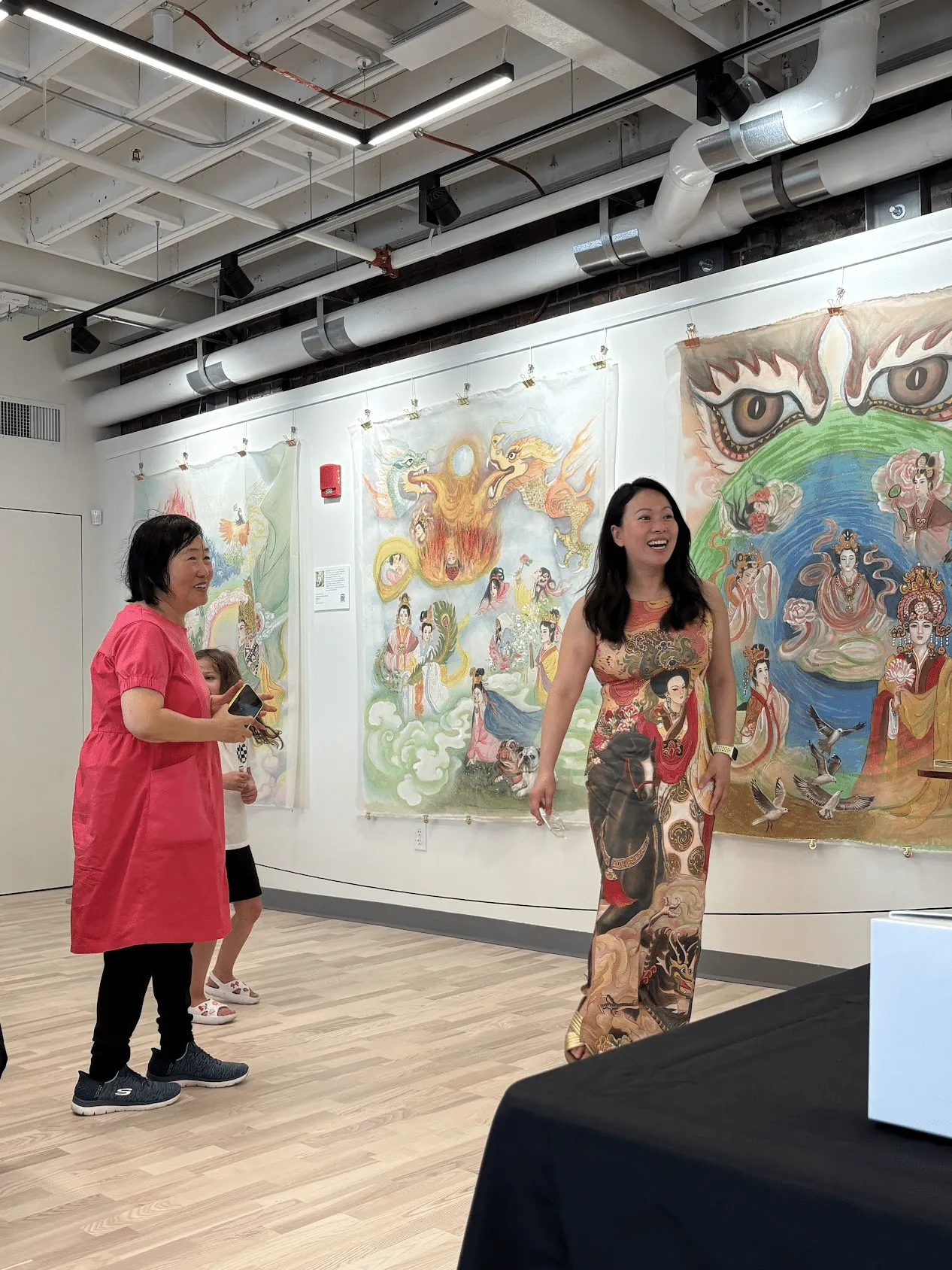
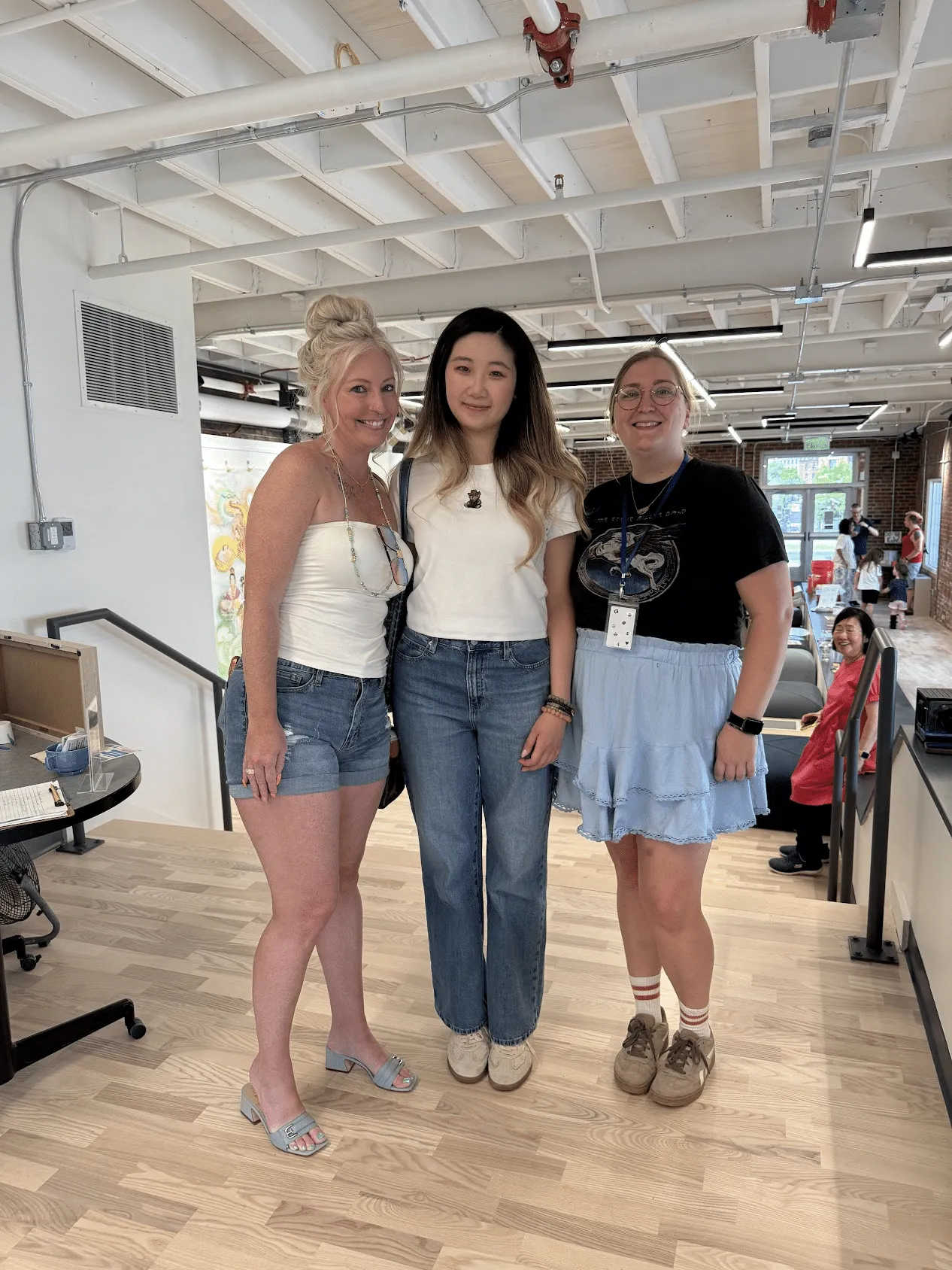
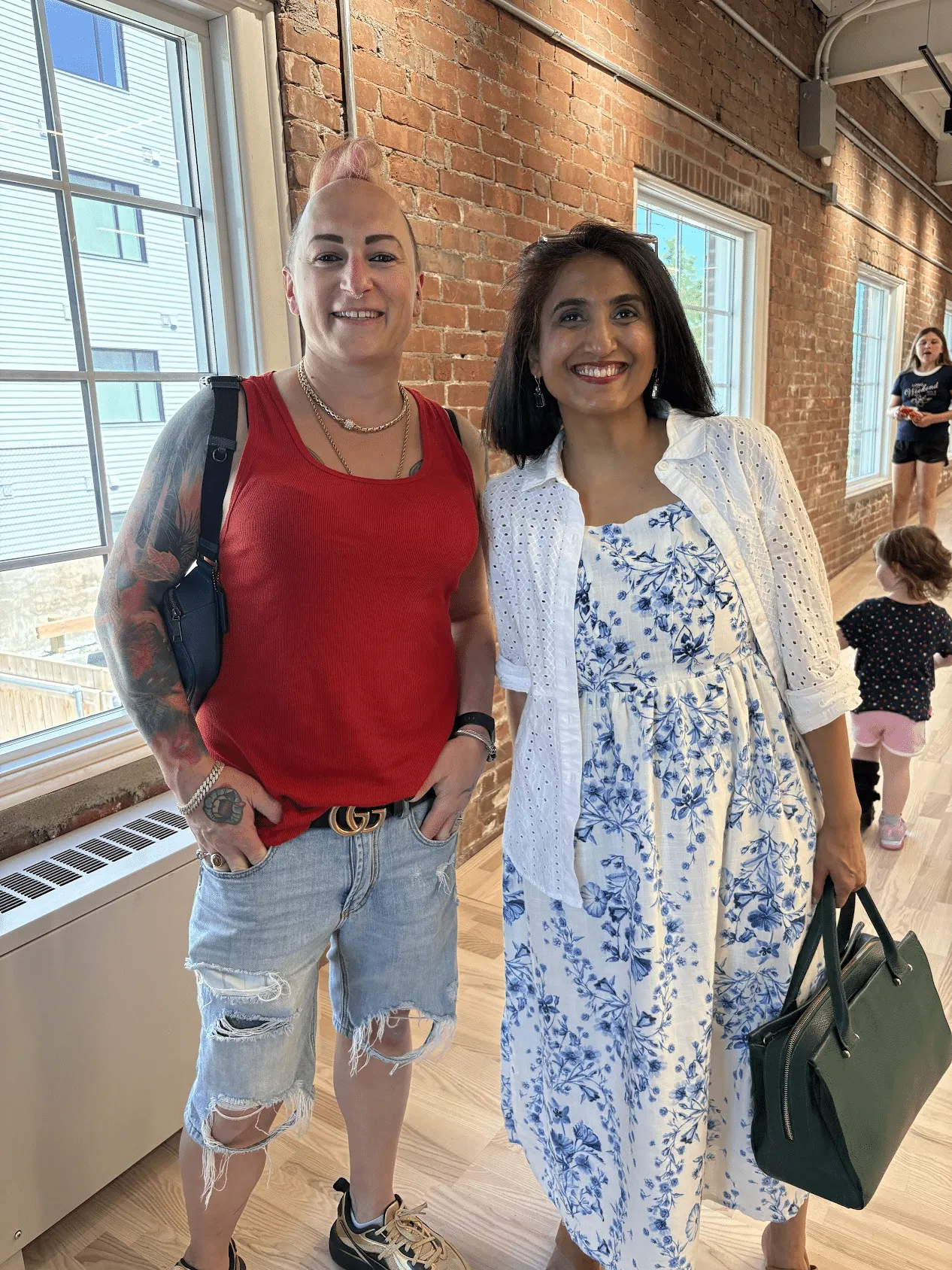
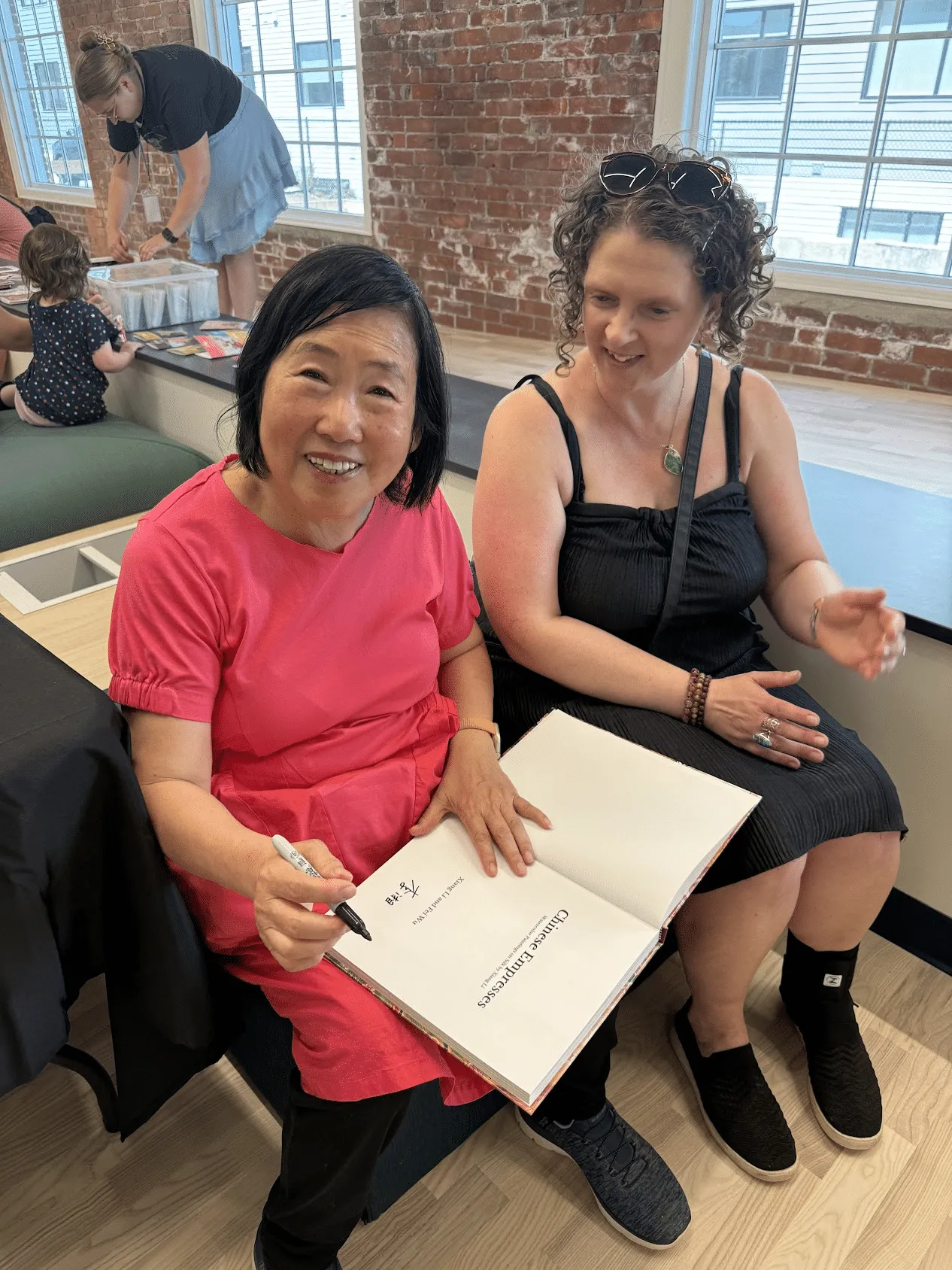
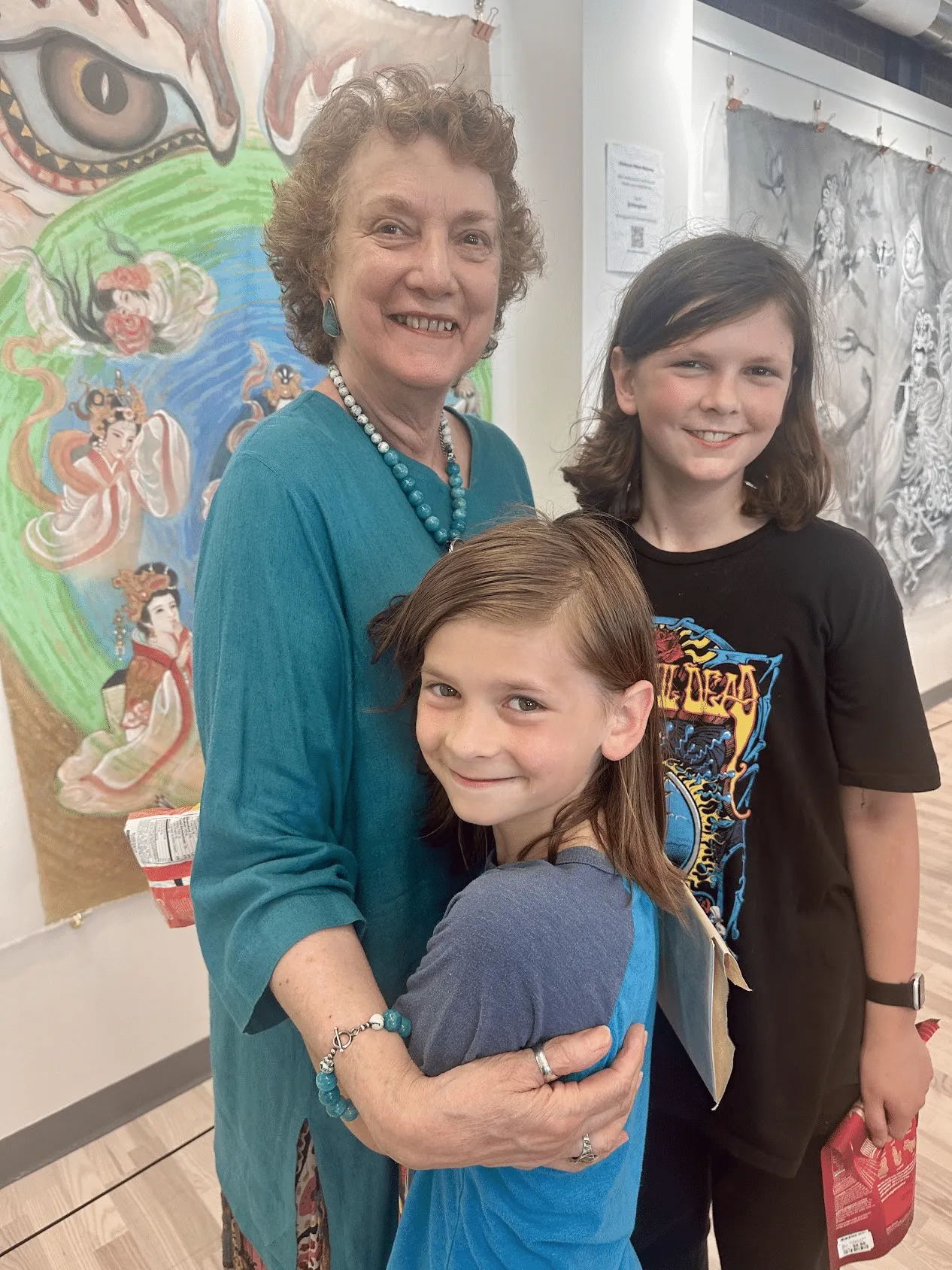
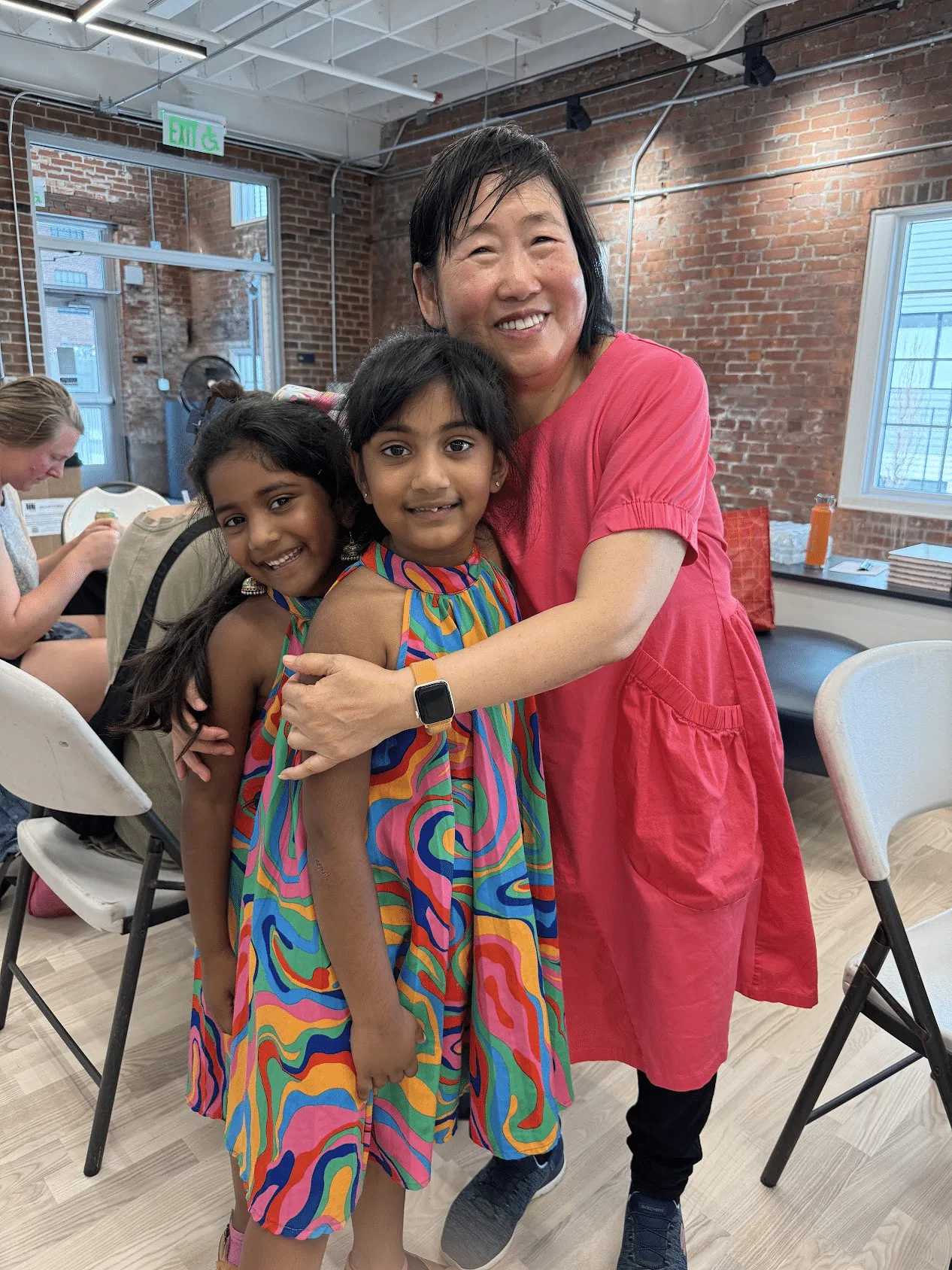
Xiang spoke about her creative journey, her decades of experience as a professional artist at the Forbidden City in Beijing, and the inspiration behind her Chinese Empresses Collection. The official Creative Hub program invited visitors to hear the stories behind the artwork, ask questions, and join Xiang for a book signing.
Her original silk paintings had already held a special place inside the Creative Hub. Xiang was invited to be the new community arts center’s first featured gallery artist, with seven original silk works installed in early April as the organization prepared to welcome the public.
Seeing the activities unfold in front of those paintings was especially meaningful.
The original artworks provided history, craftsmanship, and visual storytelling. The activity tables gave visitors permission to respond through their own choices and creations. The artist talk connected those experiences by introducing the person, research, and life journey behind the finished work.
Rather than asking visitors to choose between learning and playing, we allowed both to happen in the same room.
A Space for Children—and for Adults to Be Creative Again
One of our favorite parts of the afternoon was seeing children and adults participate side by side.
Art activities are frequently described as children’s programming, but adults also need opportunities to create without pressure. Many people have not painted, designed jewelry, or experimented with fragrance in years. Some may not have done these things since childhood.
A welcoming activity table can remove the fear of doing something incorrectly. There is no test, no competition, and no single ideal result. You simply begin.
This is one reason we believe multisensory programming can make exhibitions more approachable. Visitors do not need previous knowledge of Chinese history or traditional silk painting to participate. The activity gives them an entry point. From there, curiosity often leads them back to the artwork.
A child painting a bear may begin to notice the colors in an empress’s robe. An adult assembling a necklace may look more carefully at an imperial headdress. Someone creating a fragrance may begin imagining the flowers, gardens, incense, and interior spaces represented within the paintings.
The activities do not replace the art. They create new pathways into it.
What We Are Learning
Our second multisensory experience confirmed something important for us: engagement does not have to make fine art feel less serious.
It can make the experience deeper.
Xiang Li’s original silk paintings represent decades of training, historical research, cultural preservation, and meticulous work. Creating an inviting environment around them does not diminish that achievement. It allows more people to form a personal connection with it.
At JMAC, we discovered how strongly visitors responded to an exhibition they could experience through multiple senses. At Creative Hub, we learned that hands-on activities could become a natural part of an artist talk and book signing—not simply an addition for children, but a shared experience across generations.
We are still experimenting. Some activities work better than expected. Others teach us how to improve the setup, instructions, materials, and flow of future events. But that process is part of the excitement.
We do not want Xiang Li Art exhibitions to feel identical from one venue to the next. Each community and space offers a chance to try something new.
Thank You, Creative Hub Worcester
We are deeply grateful to Creative Hub Worcester for welcoming Xiang Li’s original silk paintings and allowing us to transform the gallery into a space for art, conversation, storytelling, and making.
The Creative Hub is not only a place where finished artwork is displayed. It is a growing community arts center where people can gather, learn, experiment, and connect. That spirit made it an ideal home for this afternoon.
Thank you to every child, parent, grandparent, friend, artist, neighbor, and first-time visitor who joined us. Thank you for listening to Xiang’s stories, asking thoughtful questions, creating alongside us, and bringing your own energy into the gallery.
Some guests left with a signed copy of Chinese Empresses. Others carried home a painted bear, a handmade necklace, or a personal fragrance.
We hope everyone left with something less tangible too: a memory of an afternoon when art was not only something to look at, but something to see, smell, touch, make, wear, discuss, and experience together.